
What does 'being a Designer' actually mean?
Maybe not a silly question after all!
A conversation on what being a Designer means made me think of all we would ideally know for effective lateral thinking.
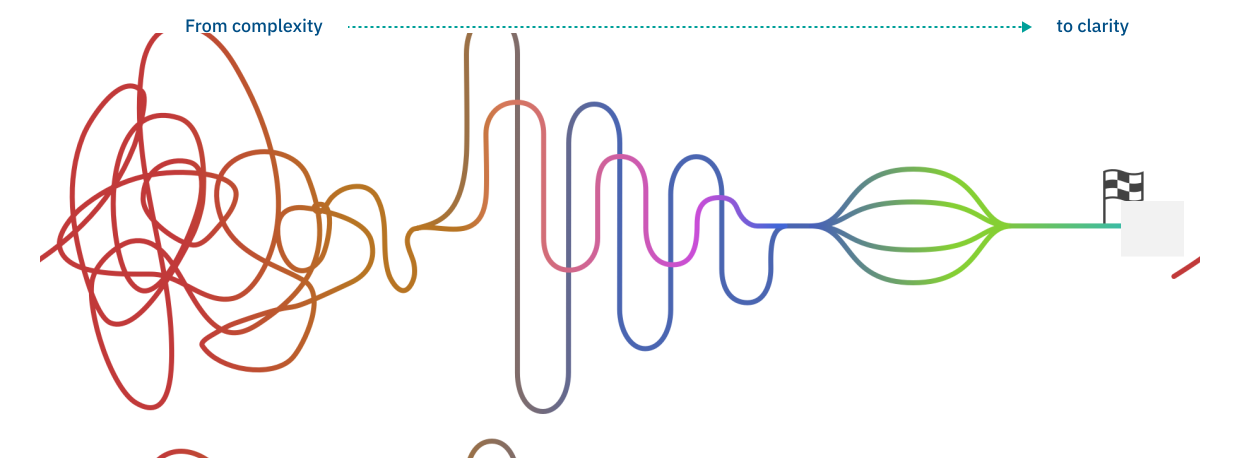
One of the definitions of Design I would get behind says Design is a way of working towards intentional change. To go from now to then (from complexity to clarity), there are many areas of knowledge that may come into play, which is to say everyone is a Designer (insofar everyone plays a role, be it passive or active, in what the final outcomes may be).
This wide range of knowledge types is what makes this job a bit more complex than it is commonly understood (also fun), for you're both a connector and a creator, collaborating to join the dots across disciplines and (sometimes) even 'creating' to bring about something new, no matter wich designer type you may identify with.
This is, then, an attempt at listing types of knowledge that a 'good Designer' should be aware of and that would improve a given design process.
I may keep updating this...
Design in all its forms
Studying other types of Design is adding more tools to the box. Be it on screens, paper or beyond, and even if it's called something else (Architecture, Engineering) we design landscapes, interiors, buildings, clothes, machines, maps, systems, etc. Nature does too, for efficiency or other reasons. Design happens in context and it can help us join the dots between a Kingfisher and a high-speed train.
Interaction design and HCI
We interact with many interfaces, and we're all different (and so are our contexts). The machine should adapts to us but over time our mental models may become those of the machine; some past paradigms may seem laughable now. We even design incentives, behaviours and entire realities through behavioural design, in how we interact with systems and the world around us.
Research methods and collaboration
The toolbox to learn what we need to make better decisions. Research is a part of Design in understanding to ideate, and this often involves effective communication and collaboration with everyone around us, adapting to constraints and culture.
Business
We don't design in isolation. We work to develop and de-risk businesses. As such, Designers need to be business-aware in knowing how organisations work and why. Design needs to navigate business ecosystems (politics included) to drive valuable outcomes.
Technology and Science
A famous person used to say that Design is how it works. So is Engineering, which is based in Science. When we envision something, the knowledge of what was happened before, what we have now and what is possible (or may be one day), helps towards better Design. In a way, Science is a superpower.
Innovation
There is this story about the GameGear and the GameBoy. They were both innovative.
The first had superior tech and games, colour screen and cool sound, but did not sell much. The second one became an icon, by focusing on what truly mattered to users in context.
Innovation tries to understand humans and imagines the future to find value where others haven't.
Marketing, branding and communication
Pretty basic to know the ins & outs of how businesses acquire, satisfy and retain customers, how a brand operates like a promise on our minds and how this has evolved from the first trade marks to our complex reality of strategies and tactics, inside and outside of screens. We know the medium is the message.
Sociology and Anthropology
Human social behavior, patterns of social relationships, social interaction, and aspects of culture associated with everyday life. Linguistics, patterns of behaviour and cultural meaning. Norms and values past and present... all helpful to explain, for example, why US brands have often failed in Europe.
Psychology
Seem pretty clear how the study of human behavior, both conscious and unconscious phenomena, mental models and processes such as thoughts, feelings, and motives is essential to designing anything, and how it becomes essential in disciplines like Beahvioural Design.
Visual Design
Graphic design (the basics and beyond), at the very least to the point of awareness on how to tell what works from what does not, and the way it influences perceptions in context. Some mix it up with UX Design (they are related but are different disciplines). Design systems, colour and perception theory, typography, grids, etc.
Accessibility (a11y)
Another no-brainer. Accessible and inclusive interfaces (and tools, and everything else) are a good way to not slam the door in the face of a large portion of your current and potential audience. They're also neater, better to use and more liked by search engines. Often it is also the Law, which is another design constraint and often a handy thing to know.
History of Art
Overlooked, but paramount to understanding ourselves, our world and other realities in context. Learning about the spiritual, narrative, philosophical, symbolic, conceptual, documentary, decorative, functional and other purposes of human expression always elevates the view. It is also a lot of fun and a great reference box at the very least.
Economics
The understanding of the many Economic theories, and the different visions about how micro & macroeconomics work (and their multiple moving parts, at least to a minimum) is essential if we aspire to make strategic design choices, for we need at least some knowledge and understanding of why and how things happen around us, where they come from and even when they may happen. Otherwise we're adrift without a compass.
Politics, Geopolitics and IR
What we design and how we do it says a lot about our society. How different societies percieve reality and envision their future shapes what, why and how they choose to design. For some it explains why so much around us is so ugly, as a result of our economy, political ideals, history and culture.
Popular Culture, Literature, Theatre, Music...
Embracing Culture (our own as well as other) as means of creative expression, meaning, storytelling, and cultural participation is to be part of the context we design for, as it expands our horizons and our thinking.
Is it possible to cultivate any interest for Design without a passion for the Arts?
This is a work in progress
I may keep updating this list as more things are suggested or come to mind!
Send a suggestion via email here
alexnogues.com 2025-26