
The Getty Foundation
User research and interface design
Expanding access and understanding of a famous 16th-century Codex.
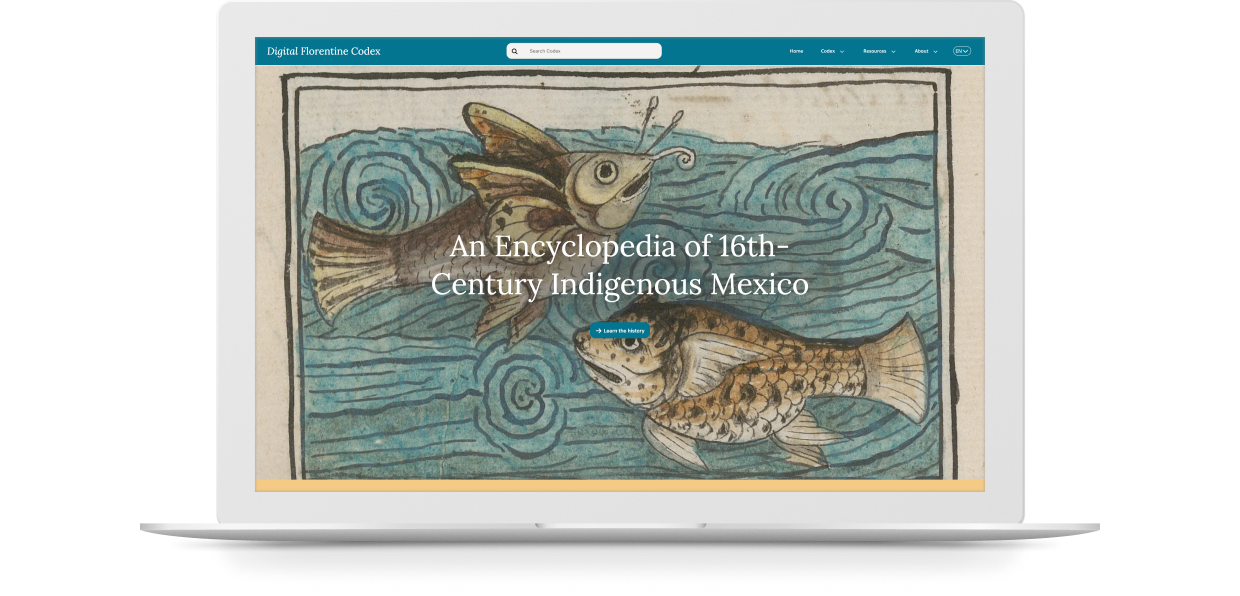
Summary
Edit: 🏆 The Digital Florentine Codex received an Anthem Award!
I led the pre-launch research that included user testing, in order to improve different usability aspects of Getty Foundation's new Florentine Codex website in order to optimise usability.
Work included research design (requirements, key journeys, card sorting, surveys, interview guides, data collection, etc.), user interviews and the final reserch reports, where we distilled all the insights into design improvements.
The team collaborated with the Getty Research Institute, working on all aspects of visual design, user experience, the data modelling and all the technical implementation to make it possible.
The result is a great example of a unique museum piece turned successfully into a digital asset, open for educators and scholarly research worldwide, bulit using The International Image Interoperability Framework (IIIF).
95
People directly involved in the making of this site
12
Key user journeys tested
3m
Three million views and counting!
My role
- User testing
- Research report
- Design improvement
Thanks to...
Diego Lago (UI design)
Matt McGrattan (Data Science)
Finlay McCourt (Backend)
Heather Kerrigan (Frontend)
Links
Having access to the transcriptions of the Nahuatl and Spanish text , and an English translation of the Nahuatl text is an immense contribution towards making scholarly research more equitable across the world. The images are also critical for researchers who wish to access high quality digital surrogates due to limited time or funding for travelling to Italy in order to view the codex at its current repository.
Testing participant 3
The long read
0. What is the Florentine Codex?
The Florentine Codex, or Historia general de las cosas de nueva España (General History of the Things of New Spain), is one of the most important manuscripts of sixteenth-century New Spain because of its encyclopedic content about pre-Hispanic and early colonial Mexico.
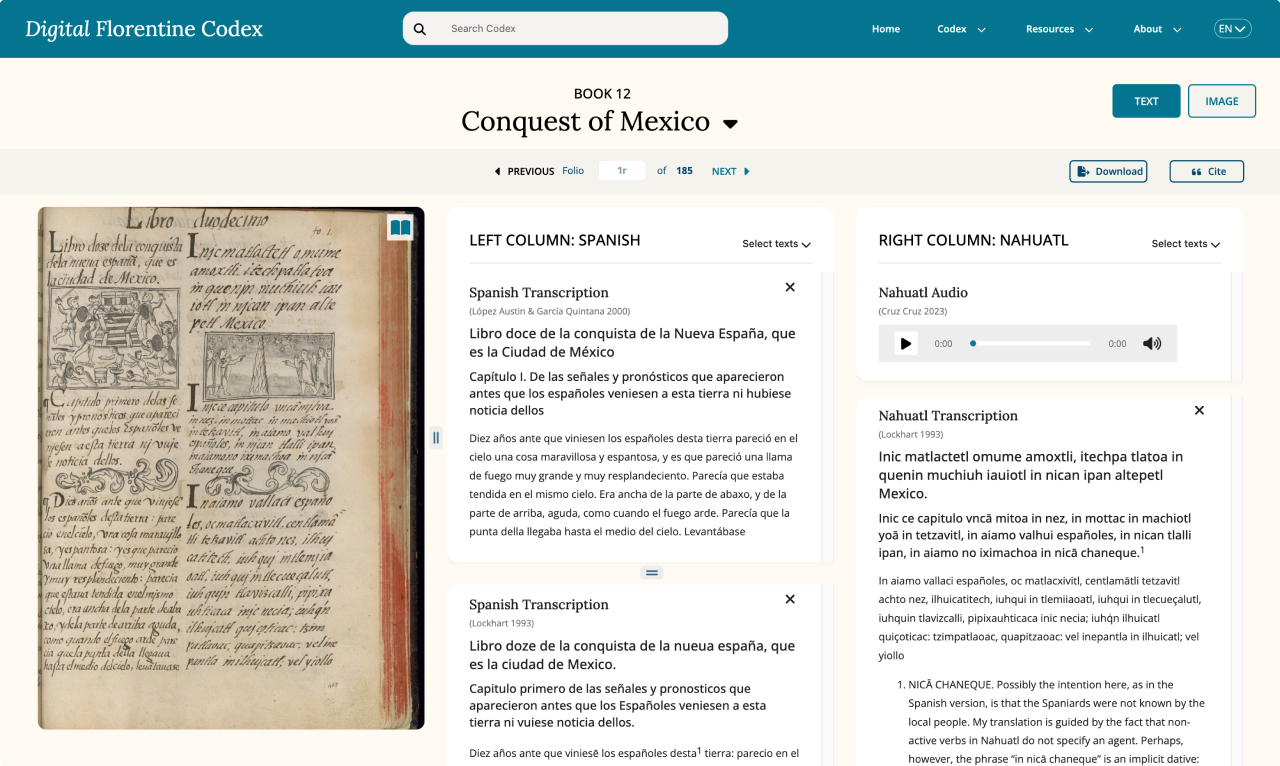
It was created by Franciscan friar Bernardino de Sahagún and a group of Nahua elders, authors, and artists. The Florentine Codex has twelve illuminated books amounting to 2,446 pages. Bound in three volumes, this bilingual manuscript features two columns of text—Spanish on the left and Nahuatl on the right. Modeled on Roman and medieval encyclopedias (such as Pliny the Elder’s Natural History), the codex addresses topics such as medicine, rhetoric, astronomy, religion, flora, and fauna in addition to Book 12, which is a Tlatelolcan account of the Spanish invasion.
1. About the tests
We tested different tasks / functionality with several participants on the new FC website, in order to assess the suitability of some of the choices and assumptions made during the design phase, and improve accordingly.
Without direct input from potential users, many opportunities to enhance the interface would be left on the table, jeopardising both the adoption and the experience. We designed the sessions in a way that both conversations during the live sessions and follow-up questions would touch upon important aspects of the Florentine Codex site.

2. Usability sessions
During the live sessions we requested that participants would complete certain tasks, voicing their thoughts while we observed how they got on. We would then assign a score to how the site performed with each of them.
We then logged comments on how they performed each of these tasks and any trouble they had completing them, assigning a score (depending on whether it was difficult or not), where no score (zero) meant the participant executed the task without a problem right away and three meant the participant could not do it without guidance.
Main topics of the usability testing interviews:
- First impressions
- Search and filtering
- Accessing content in both languages
- Using transcriptions/translations
- Citing and printing/downloading items
- Inspecting/exploring folios and images in detail
- Value of the visible metadata
Questions (tasks)
We ask the participant to do something on the site (for example: open a file).
02
Thoughts and reactions
We summarise their comments and impressions, observing how hard the task is for them.
03
Failure scores
Hard or easy? We assigned a basic score to how they do.
04
Aggregated scores
The sum of this scores across participants gives us a good hint about the areas that would need revisions

2. Follow-up survey
We also asked participants to complete a survey, to assess their impressions of key aspects of their recent experience in regards to the areas of the site that we identified as more important. This survey was made of mostly likert-scale questions, with open fields for additional comments in each theme section.
Main topics of the follow-up survey:
- Navigation, search and ease of use
- Visual design
- Use of language on the site’s content
- Performance of the site
- Outcomes and takeaways
- Any additional comments
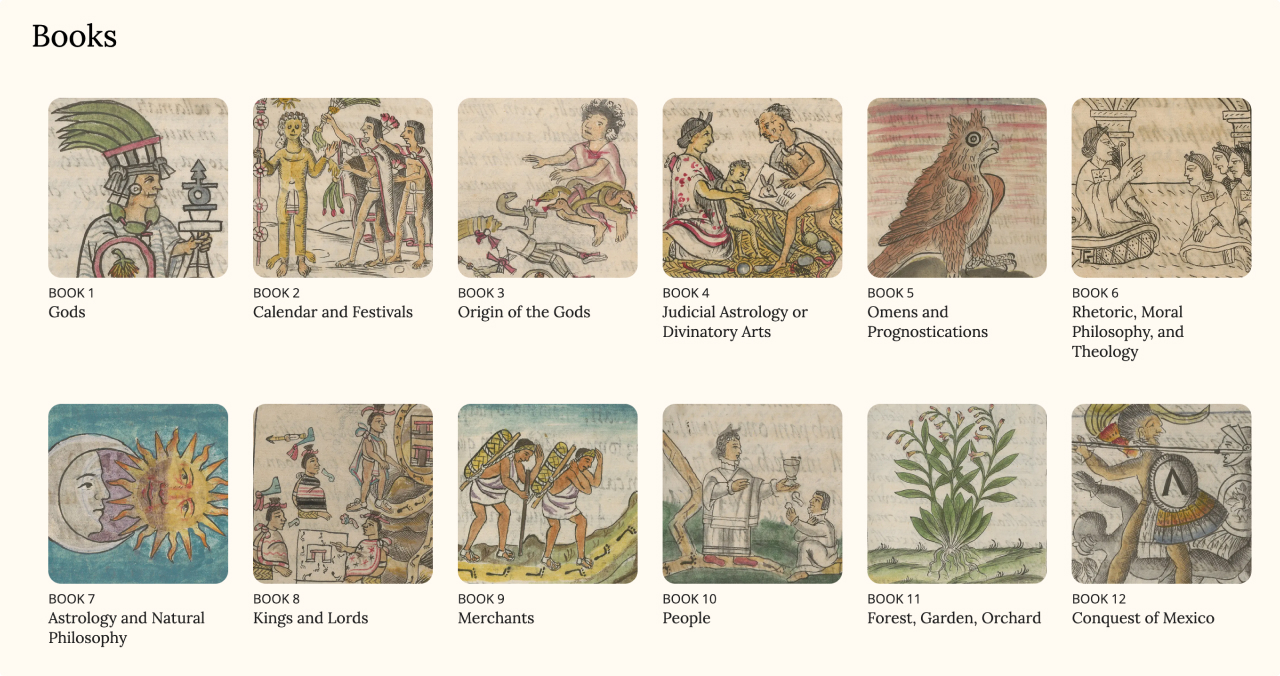
↑ The 12 books of the Codex.
3. Card sorting exercise
A card sorting exercise was helpful in getting feedback from participants on what were the most important contents and features of the site.
↑ Useful feedback on what the most valuable content is.
4. The Digital Florentine Codex
Today the Digital Florentine Codex (DFC) is an enhanced digital edition that unlocks this encyclopedic content and makes the texts and images searchable.
The organisation I was part of at the time, Digirati (a digital consultancy and software company), designed and built the DFC using a bespoke version of Canvas Panel—a viewer built according to International Image Interoperability Framework (IIIF) standards—which delivers both images and texts.
This project will be very useful for so many researchers and general people interested in the pre-Columbian era. Wonderful job. Thank you!
Testing participant 5


